
Persian (Farsi)
Persian, also known as Farsi, has gained increasing importance among Middle Eastern languages mostly because of the political changes that have taken place in Iran, but also because of the country having one of the fastest growing economies in the region. Persian was the official language of Persia (the old name for modern-day Iran), which changed its name for political reasons – hence the confusion over the terms Farsi, Parsi and Persian, which are basically different names for the language spoken in modern-day Iran. While Persian is mostly spoken as the official language of Iran, there are many variants spoken there that are official languages in neighboring countries, for example Persian Dari in Afghanistan and Tajikestan, Pashto in Afghanistan and Pakistan, and Kurdish in Iraq and the southern part of Turkey. To help you have more sense of what might be important when assigning you translation to our project managers, you may find some of the information below useful.
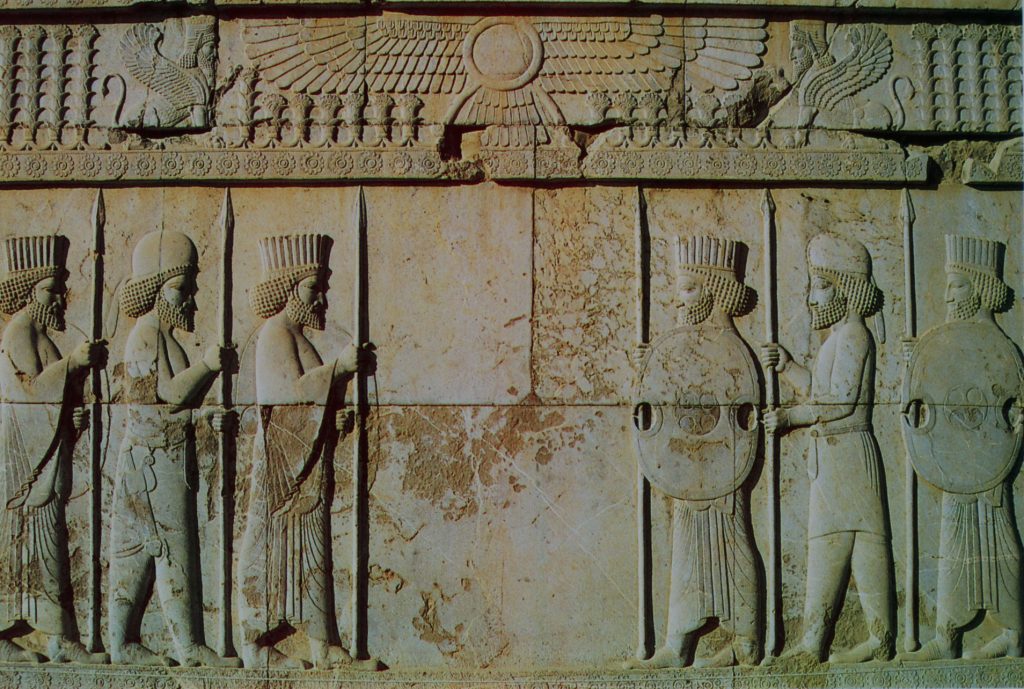
Persian (Farsi) Quick Facts:
- It is the official language of Iran.
- The large number and diversity of Farsi language dialects and languages closely related to Farsi often make it difficult to determine whether a speech is simply a dialect of Farsi or another language altogether. Within each of the varieties of the Persian language – Farsi, Dari, and Tajiki – there are a number of unique dialects, mostly closely related and mutually intelligible Baluchi, Dari, Gilaki, Kurdish, Luri, Mazandarani, Tajik, and Talysh.
- Standard Persian is based on the dialect spoken in and around Tehran, the capital of Iran.
- The Persian language has been written with a number of different scripts, including the Old Persian Cuneiform, Pahlavi, Aramaic, and Avestan, Cyrillic and Latin alphabets.
- Farsi is written in a flowing Perso-Arabic script that reads from right to left. Much like cursive writing in English, most of the letters are connected to one another. In writing, Farsi generally makes use of only consonants and long vowels, not showing short vowels in the written form (although they are pronounced). In some cases, diacritic marks – dots over the letter that convey a certain sound – are added; however, this is generally done only by children or by older people who are learning Farsi as a foreign language.
- The grammatical systems of Farsi (Western) Persian and Dari (Eastern) Persian do not differ in any significant way. The description below covers the main grammar points of both languages. Both Dari and Farsi are inflected languages, i.e., they add suffixes to roots to express grammatical relations and to form words. Unlike many other Iranian languages, Dari and Farsi have lost most of their noun and verb inflections.
- The sound system of Standard Persian has 29 phonemes, i.e., sounds that make a difference in word meaning.
- The vast majority of modern Iranian Persian and Dari text is written with the Arabic script with the exception of four characters. Tajiki, which is considered by some linguists to be a Persian dialect influenced by Russian and the Turkic languages of Central Asia, is written with the Cyrillic script in Tajikistan .
- The Old Iranian languages include Old Persian and Avestan, the language of the ancient scriptures of Zoroastrianism, known as the Avesta. Evidence of the Old Persian language can be found in the cuneiform inscriptions of the Persian Achaemenid Dynasty, which lasted from approximately 550 to 330 BC. As a spoken language, Old Persian existed until about the 3rd century BC.
- Middle Persian, also known as Pahlavi, after the Parthians who ruled Persia after the collapse of Alexander’s Empire, is known chiefly through its use in Persian’s pre-Islamic Zoroastrian religious writings. Middle Persian. Dating from approximately 300 BC to 950 AD, Middle Persian developed around the same time as a number of other Middle Iranian languages, including Parthian, which is believed to have been very similar.
- The modern Farsi (or Modern Persian) developed by the 9th century. Modern Farsi exhibits a simplified grammar system in comparison to Middle Persian, and it also has an increased amount of adopted Arab language vocabulary.
- Classical Persian remained essentially unchanged until the nineteenth century, when the dialect of Tehran rose in prominence, having been chosen as the capital of Persia by the Qajar Dynasty in 1787. This Modern Persian dialect became the basis of what is now called Contemporary Standard Persian. Although it still contains a large number of Arab terms, most borrowings have been nativized, with a much lower percentage of Arabic words in colloquial forms of the language.
- An estimated 40 million people in Iran alone claim Farsi as a native language. Other countries in which Farsi is spoken include Afghanistan, Tajikistan, and Iraq.
- The origin of Modern Persian is not clear. Although greatly influenced and closely affiliated to Middle and Old Persian, there is no conclusive evidence that it is directly descended from these languages. It may instead derive from a Pahlavi dialect once spoken in northeast Iran.
- Old Persian, by contrast, and its immediate descendant Middle Persian, originated in a province in southwest Iran that was once the center of the Persian Empire -Parsa or Fars-, hence the contemporary Persian name of the language: Farsi.
- The Early Modern period of the language (ninth to thirteenth centuries), preserved in the literature of the Empire, is known as Classical Persian, due to the eminence and distinction of poets such as Roudaki, Ferdowsi, and Khayyam. During this period, Persian was adopted as the lingua franca of the eastern Islamic nations.
Extensive contact with Arabic led to a large influx of Arab vocabulary. In fact, a writer of Classical Persian had at one’s disposal the entire Arabic lexicon and could use Arab terms freely either for literary effect or to display erudition.