
Turkish
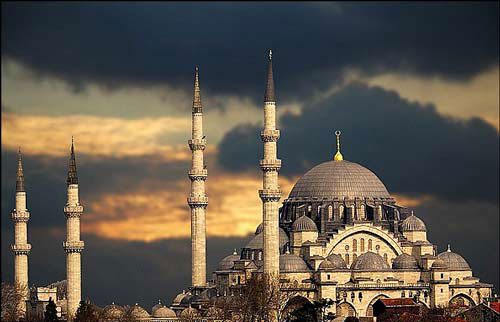
Turkey has a geographical importance in the region, as part of it is situated in Europe and its eastern part is in the Middle East. Thus historically it has served as the communication gateway to the rest of Middle Eastern world. Depending on where your Turkish translation is going to be used, it is important to know something about this context for the language.
Turkish Quick Facts:
- It serves as the national language of Turkey. It is also an official language of Cyprus and is spoken by a significant number of minorities throughout Central Asia, the Middle East, and the Balkans.
- There is a significant degree of mutual intelligibility between Turkish and other Oghuz languages such as Azerbaijani, Turkmen, and Qashqai.
- The letters Q, X, and W are not included in the Turkish alphabet, though they can appear in foreign names.
- English is a subject verb object (SVO) language, but Turkish is not. In Turkish, verbs appear at the end of a sentence.
- Like English, the Turkish language uses honorifics—words that imply or express high status, politeness, or respect—but the syntax is a bit different. Instead of the honorific appearing before the person’s name, as it does in English—for example, a teacher may be addressed Professor Yusuf—they appear directly after the person’s name: Yusuf Hoca.
- Turkish has 28 phonemes, i.e., sounds that make a difference in word meaning: eight vowel phonemes and 20 consonant phonemes. The sound system of the language is characterized by vowel harmony, a type of phonological process that dictates which vowels may be found near each other in a word
- Major Turkish Dialects: Danubian, Dinler, Edirne, Eskisehir, Gaziantep, Karamanli, Razgrad, Rumelian, Urfa. Modern Standard Turkish is based on the variety spoken in Istanbul, the country’s largest city.
- Turkish used to be written in a version of the Perso-Arabic script called Ottoman Turkish. In 1928, Atatürk had the Latin alphabet adapted to the Turkish vowel system. This new alphabet was in use from that point on.
- Written language is derived from Latin(Roman) script.
- Mustafa Kemal, who was later given the name of Atatürk ‘Father of the Turks’ was responsible for a wide range of reforms that helped to modernize Turkey, including replacement of the Arabic script with the Roman one, and purging the language of Arabic and Persian words.
- Estimated 88 million Speakers around the world.
- It is spoken in Turkey, where it is spoken by approximately 66 million people.
- Classified as Turkic branch of the Altaic language family.
- When the Republic of Turkey was founded in 1923, as part of modernizing the country, Turkey’s first president Mustafa Kemal Atatürk instituted various policies to support language reforms during the first several years of Turkey’s independence. This included these major events:
- Old (Anatolian and Ottoman) Turkish, 13th–16th century
- In 1928, Atatürk mandated the use of the Turkish alphabet. Turkish used to be written in a version of the Perso-Arabic script called Ottoman Turkish. In 1928, Atatürk had the Latin alphabet adapted to the Turkish vowel system. This new alphabet was in use from that point on.
- In 1932, the Turkish Language Association (Türk Dil Kurumu or TDK) was formed. One of its goals was identifying and removing foreign-sourced words from the Turkish language and replacing them with authentic Turkish words.
- According to the Ministry of Foreign Affairs, before 1932 the use of authentic Turkish words in written text was 35-40 percent. This figure has risen in recent years to 75-80 percent, proof that Atatürk’s language revolution gained the full support of public.
- Four periods of Turkish may be differentiated:
- Old (Anatolian and Ottoman) Turkish, 13th–16th century
- Middle (Ottoman) Turkish, 17th–18th century
- Newer (Ottoman) Turkish, 19th century
Modern Turkish, 20th century.